Deserts might look empty and lifeless, but they are full of living things that rely on each other to survive. The Desert Food Chain shows how energy moves from plants to animals, and then to predators. In deserts, water is scarce, and the heat is intense. Still, many plants and animals have special adaptations that help them live there. Understanding the desert food chain helps us appreciate how nature balances itself, even in the toughest places on Earth.
What Is a Food Chain?
A food chain is a simple way to show who eats whom in nature. It starts with plants that make their own food using sunlight. These plants are eaten by small animals. Then bigger animals eat the small animals. The chain ends with top predators. In deserts, the food chain is shorter because resources like water and food are limited. But it still works perfectly because every living thing has a role.
How the Desert Food Chain Works
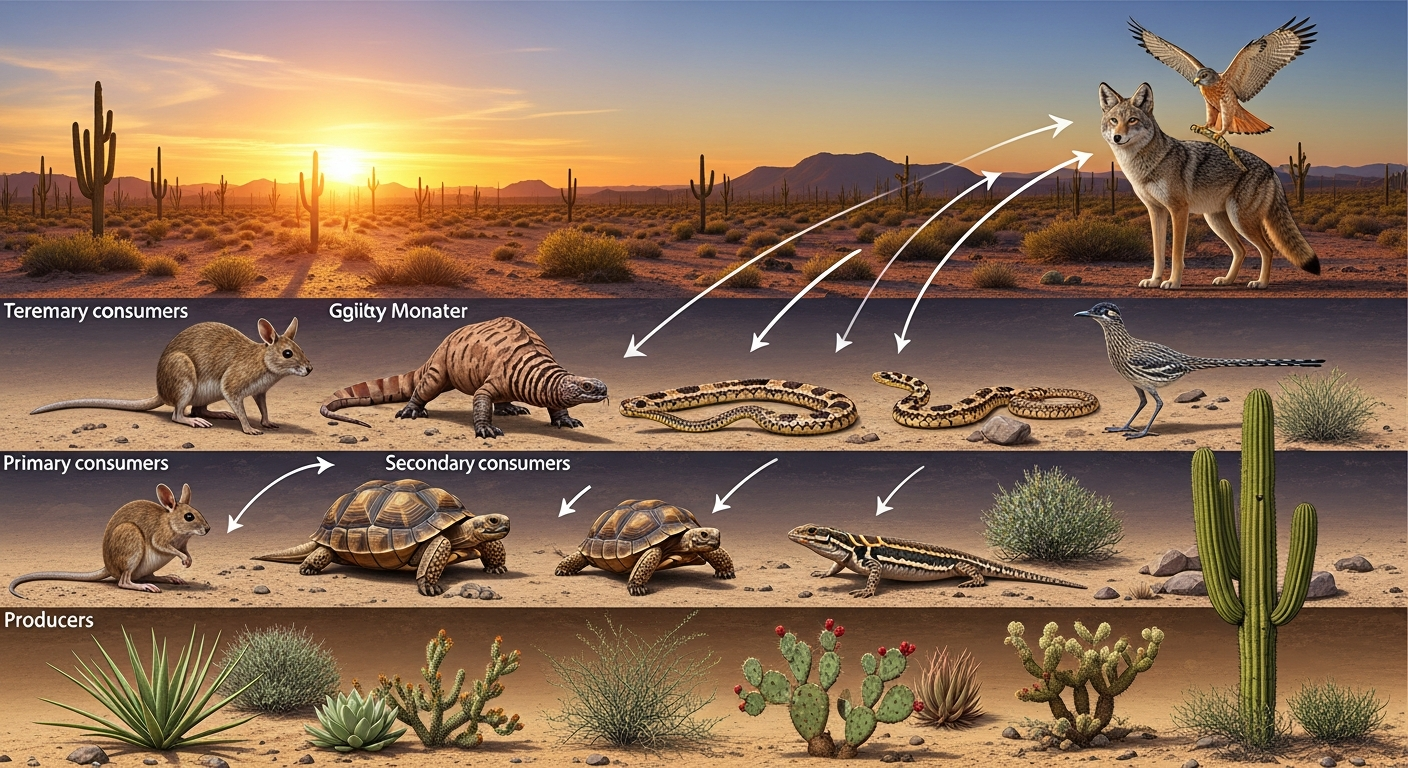
In a desert food chain, energy begins with plants that can survive without much water. These plants include cacti and shrubs. Small insects and animals eat the plants. Then bigger animals like foxes and snakes eat those small animals. Finally, predators like hawks or coyotes sit at the top. Each step is important because if one group disappears, the whole food chain can collapse.
Producers: The First Level in the Desert Food Chain
The first level in any food chain is the producers. In deserts, producers are usually plants like cacti, grasses, and shrubs. They use sunlight to make food through photosynthesis. Desert plants have thick skin or deep roots to save water. Even though deserts are harsh, producers still create the base of the desert food chain.
Primary Consumers: The Herbivores
Primary consumers are animals that eat plants. In deserts, these include insects, rabbits, and small rodents. These animals get energy from the plants and are also a food source for bigger animals. For example, a desert mouse might eat seeds, and then a snake might eat the mouse. This shows how the desert food chain connects all living things.
Secondary Consumers: The Small Predators
Secondary consumers are animals that eat primary consumers. In deserts, these include lizards, birds, and small snakes. They help keep the population of herbivores under control. Without secondary consumers, herbivore numbers would grow too fast and could harm the plant life. The desert food chain depends on balance.
Tertiary Consumers: The Top Predators
Tertiary consumers are at the top of the desert food chain. These include predators like hawks, coyotes, and large snakes. They eat secondary consumers and help maintain balance. They are also called apex predators because they have no natural enemies. These animals show how energy moves up the food chain.
Decomposers: Nature’s Clean-Up Crew
Decomposers like fungi, bacteria, and insects break down dead plants and animals. They turn them into nutrients that return to the soil. This helps plants grow again. Decomposers play a big role in the desert food chain, even though they are not always seen. They keep the ecosystem clean and healthy.
Food Web vs. Food Chain
A food chain is simple and straight. But in nature, most living things eat many different foods. That’s why we use a food web, which is a network of connected food chains. In deserts, a food web shows how multiple animals and plants are linked. It helps us understand how energy moves through the ecosystem in a realistic way.
Examples of Desert Food Chains
Here are some real desert food chain examples:
- Cactus → Insects → Lizard → Hawk
- Desert grass → Mouse → Snake → Coyote
- Shrub → Rabbit → Fox → Eagle
These examples show how energy moves from plants to predators in a simple and clear way.
Why the Desert Food Chain Is Important
The desert food chain is important because it keeps the ecosystem balanced. Each animal and plant has a role. If one species disappears, others may also disappear. For example, if a predator like a hawk disappears, the number of snakes may grow too fast. This can lead to too many snakes eating all the rodents. The desert food chain shows how every species is connected.
Interesting Facts About Desert Food Chains
- Desert plants can store water for long periods.
- Many desert animals are active at night to avoid heat.
- Some desert animals can survive without drinking water.
- Food chains in deserts are shorter due to fewer resources.
These facts help us understand how living things adapt to harsh environments.
Desert Food Chain Biography Table (Detailed)
| Level | Role | Examples | How They Survive |
| Producers | Make food | Cacti, shrubs, grasses | Store water, deep roots |
| Primary Consumers | Eat plants | Insects, mice, rabbits | Eat seeds, hide in shade |
| Secondary Consumers | Eat herbivores | Lizards, birds, small snakes | Fast, camouflage |
| Tertiary Consumers | Top predators | Hawks, coyotes, eagles | Strong, sharp senses |
| Decomposers | Break down dead matter | Bacteria, fungi, insects | Live in soil, recycle nutrients |
(FAQs)
1. What is a desert food chain?
A desert food chain is a simple path showing how energy moves from plants to animals and then to predators in a desert ecosystem.
2. Why is the desert food chain shorter?
Desert food chains are shorter because there is less water and fewer plants, which means fewer animals can survive.
3. Who are the producers in a desert food chain?
Producers are desert plants like cacti, shrubs, and grasses that make their own food using sunlight.
4. What animals are primary consumers?
Primary consumers include insects, mice, rabbits, and other animals that eat plants.
5. What is the difference between a food chain and a food web?
A food chain is a straight line of energy flow, while a food web is a network of connected food chains.
6. Why are decomposers important in a desert food chain?
Decomposers break down dead plants and animals, returning nutrients to the soil and helping plants grow.
Conclusion: The Desert Food Chain Is a Living Balance
The desert food chain shows how every living thing depends on others for survival. From tiny plants to top predators, each part plays a vital role. Deserts may seem harsh, but they are full of life and clever adaptations. When we learn about the desert food chain, we learn how nature stays balanced even in tough conditions. Next time you see a desert, remember that it’s not empty—it’s full of life working together.